



Posted on January 4 at 7:24 PM IST
Mohammed Naseer Giyas
Politics is often reduced to slogans, strategies, and the pursuit of power. Yet, at rare moments, it rises above calculation and touches the human conscience. The recent rise of Zohran Mamdani represents one such moment—where politics moved not merely through ballots, but through hearts.
Much discussion in India today revolves around a letter Mamdani wrote to Umar Khalid, who remains incarcerated under stringent laws. This letter was not a routine expression of sympathy, nor a symbolic gesture aimed at media attention. It was a conscious, principled act that situated Khalid’s case within a broader global context of justice, civil liberties, and minority rights. In doing so, Mamdani sent a quiet but powerful message: Muslims across the world, though living under different political systems, often face strikingly similar challenges related to identity, dignity, and freedom.
Significantly, Mamdani was not alone. After his intervention, eight other US senators also urged that Khalid’s continued incarceration be reviewed without delay. At its core, the demand was simple: let justice be justice, and let truth stand apart from prejudice.
To understand Mamdani’s political significance, one must understand New York City itself. New York is not merely a city; it is a civilizational mosaic. Jews, Christians, Muslims, Hindus, Buddhists, and people of countless other faiths and identities live side by side. Places of worship coexist within walking distance of one another. Religious attire is part of everyday life, not a provocation. Mamdani’s election, therefore, did not emerge in isolation—it is a continuation of New York’s long democratic tradition.
Crucially, voters did not elect Mamdani because of his religion, nor despite it. They elected him because of his ideas, his public service, and his connection with ordinary people. This is democracy in its truest sense. At the same time, democracy does not require the erasure of personal identity. Mamdani did not abandon his faith to become acceptable, nor did he weaponize it for political gain.
For Muslims globally—and particularly for Indian Muslims—his election carries layered meaning. It affirms that Muslims can play an active role in civic and urban politics at the highest levels. It also decisively rejects the false notion that religious identity and constitutional citizenship are inherently incompatible. On a broader level, Mamdani’s rise reflects a larger global shift: Muslim politicians are increasingly entering the political mainstream in Western democracies, even as Islamophobia remains a harsh and persistent reality.
This contradiction—greater representation alongside intensified hostility—was immediately visible after Mamdani took his oath of office on the Qur’an. The act itself was deeply personal and constitutionally protected. US law does not mandate swearing on any religious text; previous mayors have taken oaths on the Bible without controversy. Mamdani’s choice violated no law, imposed no belief, and challenged no secular principle. On the contrary, it reaffirmed the essence of secularism: the state’s respect for individual freedom of conscience.
Yet, predictably, right-wing circles launched a vicious campaign. Mamdani’s oath was portrayed as “Islamisation,” his politics falsely linked to extremism, and his identity turned into a tool of fear. This reaction was not new. Across the Western world, whenever a Muslim attains public office, faith is transformed into suspicion, and representation into conspiracy.
What was equally striking, however, was the backlash to this backlash. Large numbers of citizens—across faiths and communities—rejected the hate campaign. They insisted that religion cannot be the measure of a public servant’s competence or loyalty. In this collective response lay a deeper moral truth.
Perhaps the most telling moment came not in a council chamber, but in a brief personal encounter. When a Pakistani-origin woman from Lahore told Mamdani, “You have won people’s hearts,” he reportedly became emotional. The short video of this exchange, in which Mamdani responded in Urdu, spread rapidly on social media, touching millions, whose amplification helped the moment reach a wider South Asian audience. That fleeting interaction revealed what electoral statistics cannot: Mamdani’s politics resonates because it is rooted in empathy.
His journey is even more remarkable given the circumstances. A Muslim immigrant, not born in the United States, without vast wealth, corporate backing, or a supportive media ecosystem, Mamdani succeeded at a time when anti-immigrant and anti-Muslim narratives are aggressively promoted in Western politics. His victory demonstrates that moral clarity and human connection can still overcome organized prejudice.
Ultimately, Mamdani’s success is not the triumph of one community over another. It is the victory of an idea—that civic equality, religious freedom, and shared humanity can coexist. Elections may be won through votes, but history remembers those who win hearts. For Muslims everywhere, the lesson is enduring: character, ethics, and integrity remain the most powerful tools in public life.
New York’s choice reminds the world that secularism, diversity, and constitutional freedom are not hollow slogans. They are living values—tested, challenged, and, at times, reaffirmed through courageous individuals who refuse to hide who they are.
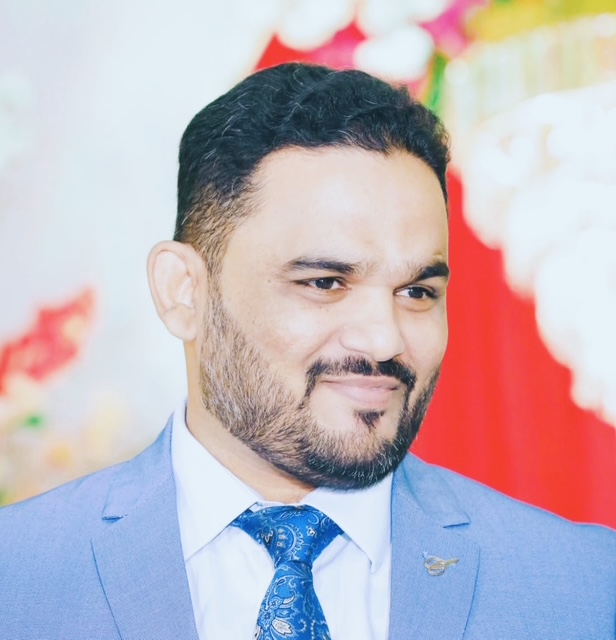
Mohammed Naseer Giyas is a multi-media and bilingual journalist with over 20 years of experience across print, digital, and television media. Founder of Raftaar-e-Deccan, he is an alumnus of IVLP, Thomson Reuters Foundation, and ICFJ, and has worked with leading English and Urdu news organisations.