


Mohammed Naseer Giyas
Reports of possible new nuclear testing by the United States have drawn strong reactions from experts and governments. Former US President Donald Trump stated during his previous term that Russia and China were secretly conducting nuclear tests. He argued that the United States must restart its own. This position has reopened a serious debate on global nuclear stability.
Data does not support Trump’s claim. Russia has not carried out an underground nuclear explosion for 35 years. China’s last such test was 29 years ago. The only country to conduct one in recent years was North Korea in 2017. Russia has tested nuclear-powered missiles and submarine systems, which are delivery technologies. These are different from full nuclear detonations. Presenting these tests as nuclear explosions changes the nature of evidence.
If the United States resumes underground testing, other nuclear-armed states will gain a direct reason to follow. Russia and China already maintain underground test sites that can be activated without long preparation. Strategic experts caution that a single new test can trigger a new nuclear arms race.
The timing is sensitive. The New START treaty, which limits the number of deployed nuclear warheads held by Washington and Moscow, will expire in 2026. If the US accelerates nuclear activities before that date, the treaty’s effectiveness will weaken. Diplomatic engagement has already slowed. Any disruption will reduce transparency between major powers.
Trump’s past national security advisers argued that the United States must demonstrate its strength to discourage rivals. This thinking influenced the push toward a more aggressive nuclear posture. Supporters of this view believe public testing signals dominance.
Nuclear scientists disagree. According to many US experts, nuclear warheads are already tested through advanced supercomputers, high-intensity lasers and simulation systems. These methods confirm reliability without producing radiation. They also avoid environmental harm. A return to explosive testing will not improve technology. It will only increase tension.
Historical evidence supports these concerns. From 1945 to 1992, the United States carried out more than one thousand nuclear detonations. Many took place in Nevada. Radiation spread into surrounding regions. Local residents reported higher rates of cancer and other illnesses for decades. Environmental researchers warn that any new explosion will reintroduce radioactive particles into air, soil and water. Once released, these particles travel long distances with wind and groundwater.
Political costs will also be high. Countries in Asia, Europe and the Middle East monitor US nuclear behavior closely. If the United States resumes tests, allies and rivals will reconsider their nuclear strategies. India, Pakistan and Israel maintain active research facilities. France and the United Kingdom continue to modernize their arsenals. East Asia remains tense due to North Korea’s continued development. A shift in US policy will influence all of these regions.
The United States holds the largest and most advanced nuclear research database in the world. Its laboratories have preserved detailed information for decades. Many former officials say this knowledge is sufficient to maintain readiness without explosions. A move toward testing indicates a political decision, not a technical requirement.
The central issue is trust. Global nuclear restraint depends on confidence that major states will follow agreements. If a leading power breaks from that approach, others will feel pressure to match. The result will be more weapons, higher costs and reduced diplomatic space.
Nuclear war is not like conventional conflict. Even a limited exchange will cause massive loss of life. Infrastructure, agriculture and public health systems will collapse. Radiation does not respect borders. Once released, it affects all populations.
International institutions and scientific communities continue to urge dialogue rather than escalation. The priority is to extend current treaties and create channels for verification. If countries agree to shared inspections, they reduce the risk of misunderstandings.
The coming years will be important. The United States, Russia and China influence global security more than any other states. Their actions shape how smaller powers behave. A single decision to conduct one test has the potential to reset decades of restraint.
The question for global leadership is clear. Whether to expand nuclear confrontation or to strengthen trust. The consequences will not remain confined within any border. They will determine future stability for every region.
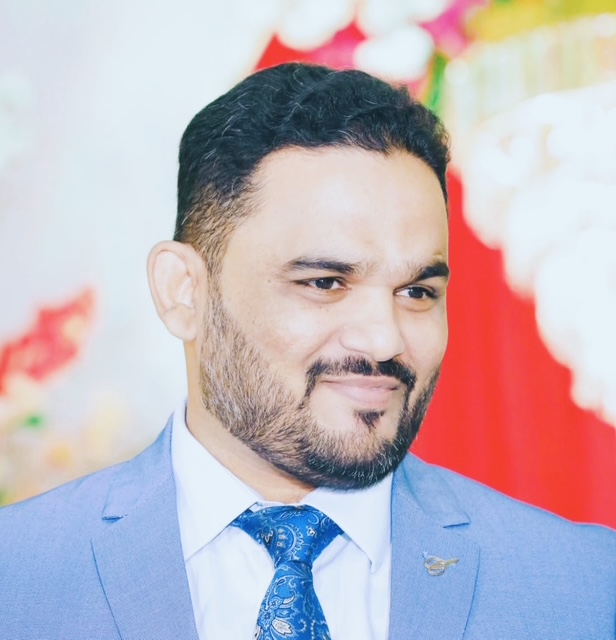
Mohammed Naseer Giyas is a multi-media and bilingual journalist with over 20 years of experience across print, digital, and television media. Founder of Raftaar-e-Deccan, he is an alumnus of IVLP, Thomson Reuters Foundation, and ICFJ, and has worked with leading English and Urdu news organisations.