



Hyderabad, New Delhi:Posted on 8 December 11:41 PM
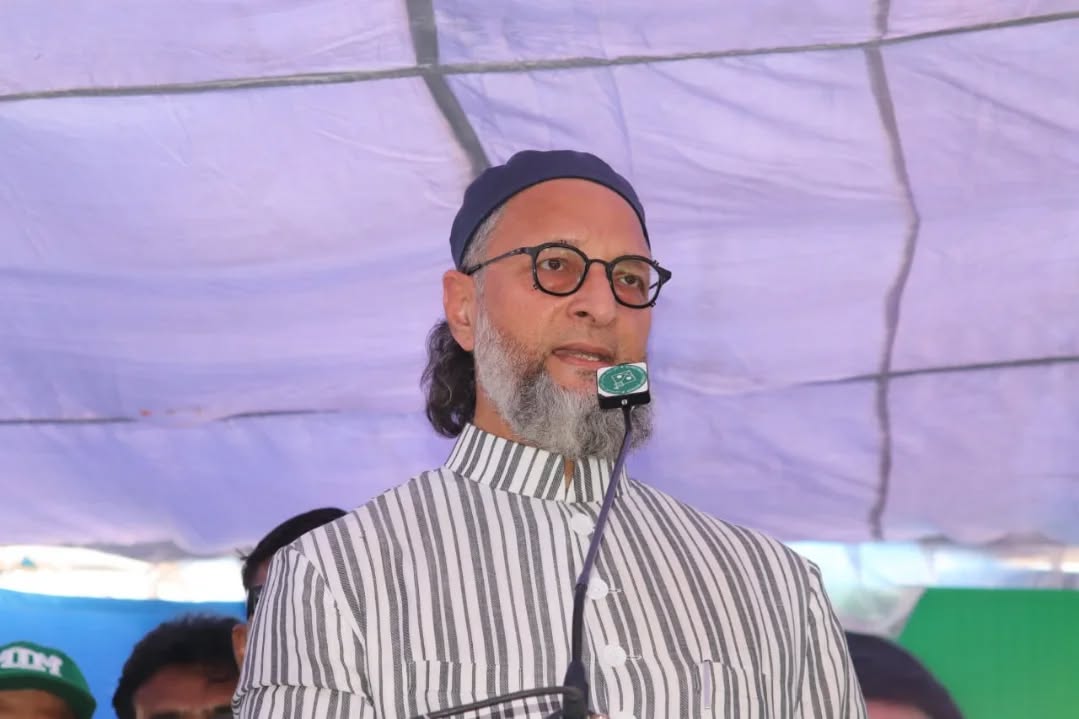
AIMIM president and Hyderabad MP Asaduddin Owaisi used the Lok Sabha debate on 150 years of “Vande Mataram” to question the government’s attempt to link patriotism with compulsory chanting of the national song. He said Indian Muslims chose India over Muhammad Ali Jinnah and nobody has the right to doubt their loyalty.
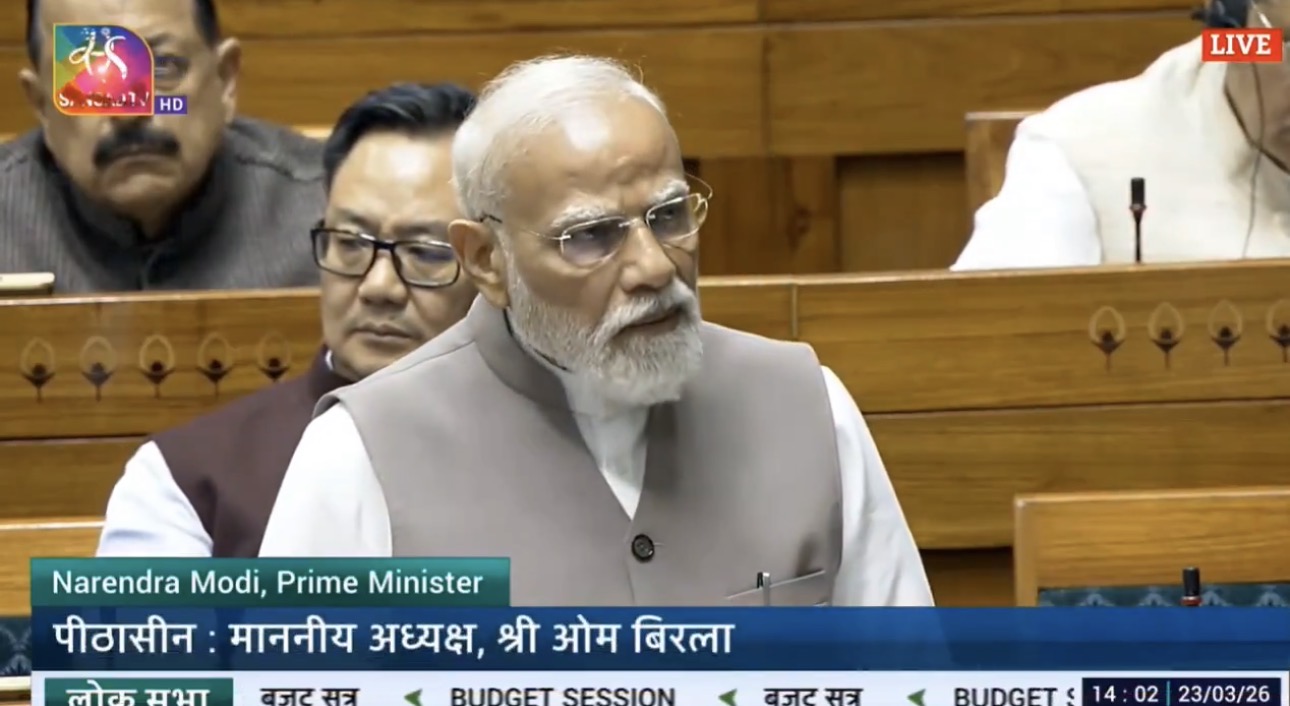
Owaisi opened his speech by criticising the timing and conduct of the special discussion, pointing out the low presence of MPs in the House. He also rejected Prime Minister Narendra Modi’s remarks on Jinnah, arguing that sections of the Hindu right had shared power with the Muslim League in pre-Independence provincial governments, while Indian Muslims who accepted India as their homeland faced repeated suspicion.
Attack on remarks by Defence Minister
The Hyderabad MP took strong objection to comments by Defence Minister Rajnath Singh on “Ummul Momineen” and “Ummul Kitab”. Owaisi explained that Muslims revere the wives of Prophet Muhammad as mothers of the believers and view the Quran as the “mother of the Book”, yet do not worship either.
He said Muslims do not worship their own mothers and do not worship the Quran, since worship belongs only to God in Islam. He accused the minister of speaking on concepts he does not understand and quoted poetry to underline that political leaders should not try to teach Muslims about their own faith.
‘Constitution begins with We the People, not Bharat Mata’
Owaisi grounded most of his argument in the Constitution.
He reminded the House that the Preamble starts with “We, the People of India” and not with the name of any deity or national symbol. It promises “liberty of thought, expression, belief, faith and worship”. On this basis he asked how any citizen can be forced to bow before any god, goddess or national personification.
Owaisi recalled proposals in the Constituent Assembly where members such as Rohini Kumar Chaudhury and K V Kamath suggested references to a deity and to “Vande Mataram” in the Preamble. Those ideas did not pass. For him this history proves that India is a republic of citizens, not of any one religious symbol, god or goddess.
Questions over status of national song
The AIMIM leader argued that there is no formal parliamentary resolution that declares “Vande Mataram” a national song with legal force. He cited several legal references.
- In the 1986 Bijoe Emmanuel case, the Supreme Court protected schoolchildren from the Jehovah’s Witnesses community who stood respectfully but did not sing the national anthem. The Court said they committed no offence.
- In a 2017 case filed by Ashwini Upadhyay, the Supreme Court did not accept a plea for wide guidelines on compulsory singing of “Vande Mataram”.
- The Prevention of Insults to National Honour Act, 1971 mentions the national flag and national anthem, not the national song.
- Article 51A on fundamental duties does not mention “Vande Mataram” either.
Owaisi told the House that love for India does not require compulsory recitation of any particular song and that any attempt to make “Vande Mataram” a test of loyalty goes against Supreme Court judgments and the text of the Constitution.
Nation belongs to all communities
The Hyderabad MP listed the social and religious groups that form India, including Hindus, Muslims, Sikhs, Christians, Jains, atheists, workers, farmers, the poor and Dalits. He said nationalism should not be turned into a form of religious worship of the nation as a goddess.
He opposed slogans that say “if you live in India, you must say Vande Mataram”, saying such lines target Muslims and other citizens who follow strict monotheism. According to him, this approach mixes nationalism with religion and weakens both.
Owaisi reminded the House of Muslim freedom fighters such as Maulana Hasrat Mohani, Yusuf Meher Ali, Maulvi Alauddin, Mahmood ul Hasan, Hussain Ahmed Madani and others who fought British rule and suffered prison and death sentences. He asked how their patriotism would be measured if “Vande Mataram” and goddess worship become the yardstick.
Islam, Tawhid and Article 25
“I am a Muslim and I follow Islam,” Owaisi said, stressing that the core of his faith is tawhid, the oneness of God. He said the Quranic call “iyyaka na’budu wa iyyaka nasta’een” requires exclusive worship of Allah, and that this religious duty receives protection from Article 25 of the Constitution and from the Preamble’s guarantee of liberty of belief and worship.
He added that Prophet Muhammad prayed for love of Madina in the hearts of believers, more than love for Mecca, to show that Islam does not oppose love for homeland. Love for country and love for God operate in separate spheres for believers, he argued, and both flow together without conflict.
Tagore letter and Jana Gana Mana debate
Owaisi referred to a 1937 letter from Rabindranath Tagore to Subhas Chandra Bose related to “Vande Mataram”. Tagore wrote that Parliament is a place for all religious groups and that a song with religious content does not fit such a setting. Owaisi said Hindutva groups ignore this history.
He also quoted an old article from the RSS-linked magazine “Organiser” that mocked the choice of “Jana Gana Mana” as the national anthem and treated it as entertainment for government parties. He asked why those who earlier questioned the anthem now present themselves as sole guardians of national symbols.
Anandamath and portrayal of Muslims
Responding to repeated praise for Bankim Chandra Chattopadhyay’s novel “Anandamath”, Owaisi read passages in which Muslim homes face arson, Muslims are described as enemies who must be uprooted and British rule is praised as a force that will save the land. He argued that this communal portrayal of Muslims cannot be brushed aside while pushing the full text of “Vande Mataram” into official spaces.
‘Do not seek loyalty certificates’
Owaisi said he loves India and will never leave the country even if mosques, businesses and personal choices face attacks. He repeated that Indian Muslims rejected Jinnah, called India their homeland and have equal ownership of the republic.
He urged the government to stop seeking “loyalty certificates” from citizens based on slogans or songs. For him, true patriotism requires:
- Ending injustice and discrimination
- Reducing poverty
- Creating employment
- Ending state excess and arbitrary action
- Fighting terrorism and violent extremism
- Stopping exploitation and conspiracy against the country
Owaisi ended his speech with the slogans “Bharat zindabad, Hindu Musalman zindabad, Dalit zindabad, Isaai zindabad, Adivasi zindabad,” and included those who follow no religion, presenting an inclusive idea of India inside the Lok Sabha.

Mohammed Naseer Giyas is a multi-media and bilingual journalist with over 20 years of experience across print, digital, and television media. Founder of Raftaar-e-Deccan, he is an alumnus of IVLP, Thomson Reuters Foundation, and ICFJ, and has worked with leading English and Urdu news organisations.