





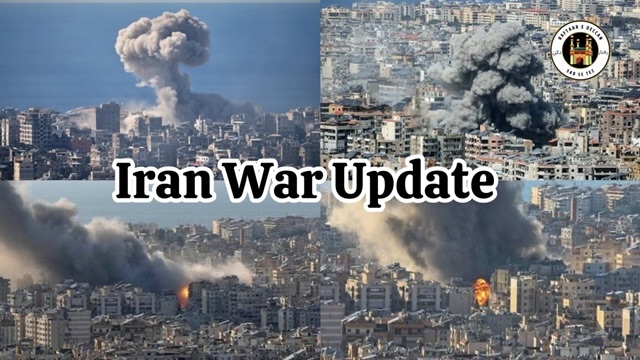
The conflict involving Iran and regional actors entered its fourteenth day with intensifying military activity, strategic messaging, and economic consequences. Reports point to ongoing U.S. air operations, potential troop deployments, and growing tensions around the Strait of Hormuz. Iranian commentary increasingly frames the situation as a multi-front confrontation involving Israel, Hezbollah, and Western forces.
The latest developments include a drone strike in Erbil, continued American air operations over Iran, and discussions about possible ground deployments in the Gulf region. At the same time, energy markets are reacting sharply as uncertainty spreads across vital shipping routes.
One of the most notable incidents occurred in Erbil, Iraq, where a drone strike hit a joint French–Peshmerga base. The attack reportedly killed one French serviceman and wounded several others. Iranian state media justified the strike by accusing France of training Kurdish insurgents in the Kurdistan Region of Iraq to conduct operations inside Iran.
Meanwhile, the United States continues its aerial campaign. U.S. Central Command confirmed that B-2 bombers carried out missions over Iranian territory. Iranian sources reported explosions near facilities connected to the country’s space research organization and the Ministry of Science in Tehran. These strikes were followed by reports of electricity and communication outages in nearby areas.
Washington is also reportedly preparing additional deployments to the Middle East. The amphibious assault ship USS Tripoli and approximately 2,500 Marines from the 31st Marine Expeditionary Unit are moving toward the region. Discussions in defense circles have also mentioned the possibility of up to 5,000 additional U.S. personnel being assigned to the CENTCOM theater.
Iranian military analysts interpret these moves as potential preparation for limited ground operations. Scenarios being discussed include attempts to occupy the disputed islands of Abu Musa, Greater Tunb, and Lesser Tunb in the Persian Gulf, or operations targeting Kharg Island, a key hub for Iranian oil exports.
At the same time, Iranian commentators argue that such deployments could expose U.S. forces to Iranian military capabilities if they operate close to Iranian territory. According to these analysts, a limited deployment could escalate into a costly confrontation for Washington.
The regional dimension of the conflict is also becoming clearer. Iranian messaging emphasizes the “unity of the fronts” within what it calls the Axis of Resistance. This narrative suggests that attacks involving Hezbollah and other allied groups are part of the same broader conflict.
Economic tensions are also rising. Reports suggest Iran may allow certain shipments, including some LNG tankers, to pass through the Strait of Hormuz while restricting others. The strategy appears designed to maintain pressure on Western economies while keeping limited trade channels open.
Oil markets are already reacting to the uncertainty. Global prices have climbed above $100 per barrel as energy producers and shipping companies adjust operations amid fears of disruption in one of the world’s most important energy corridors.
Inside Iran, the government is tightening internal security while attempting to project public unity. Pro-government rallies during Quds Day were held in Tehran and other cities despite ongoing airstrikes, signaling efforts to demonstrate domestic support during wartime.
Overall, the conflict is becoming increasingly multi-layered, involving military strikes, economic pressure, and political tensions across several countries. Analysts warn that the combination of air operations, maritime risks, and possible troop deployments could further expand the scope of the war in the coming weeks.

Raftaar e Deccan Newsdesk is the central editorial desk of Raftaar e Deccan, responsible for compiling, editing, and publishing breaking news, official statements, and verified inputs from reporters and agencies.