




11 April Posted at 1:55 AM IST
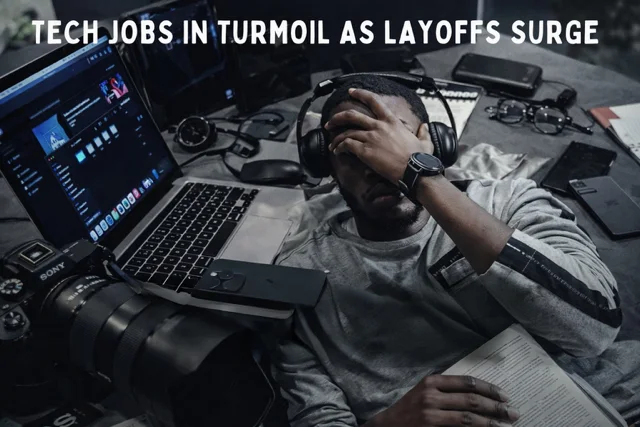
The global technology sector is witnessing a significant shift in 2026, with artificial intelligence emerging as a central force behind widespread layoffs and changing hiring practices. Just four months into the year, nearly 80,000 tech employees have reportedly lost their jobs worldwide, signaling deeper structural changes within the industry.
Major technology companies, including Amazon, Oracle, Meta, and Dell, have announced large-scale layoffs as part of restructuring efforts. While these firms cite operational efficiency and cost optimization, industry experts point to AI-driven automation as a key underlying factor. Nearly half of the job cuts are believed to be directly or indirectly linked to AI adoption.
The transformation is not limited to job losses alone. Companies are rethinking how they hire, retain, and deploy talent. Roles that were once considered stable—particularly in engineering, cloud operations, and customer support—are now being reassessed in light of AI capabilities.
India, traditionally viewed as a resilient and growing tech employment hub, is also beginning to feel the impact. Reports of layoffs affecting thousands of employees, especially in engineering and cloud divisions, highlight a shift toward a more uncertain job market. Practices such as sudden terminations and limited transition periods are becoming increasingly common.
Hiring trends further reflect this slowdown. Data from recent industry outlooks indicates that active tech job openings in India have declined by around 8% in April 2026 compared to March. Although demand remains slightly higher than the previous year, the decline suggests the beginning of a market correction.
Competition for available roles has intensified significantly. The number of applicants per job has more than doubled since 2022, creating a highly competitive environment. Many professionals report feeling unprepared due to widening skill gaps and evolving job expectations.
Recruitment processes are also evolving. Multi-stage hiring, reduced human interaction, and slower feedback cycles are becoming standard practices. While many professionals are comfortable using AI tools at work, there remains uncertainty about how these tools influence hiring decisions.
Despite these challenges, AI is also enabling new opportunities. Job seekers are increasingly using AI tools for resume building, interview preparation, and skill development. This shift is helping candidates improve confidence and adapt to changing industry demands.
The impact spans across experience levels. Mid-career professionals are exploring career shifts, while younger workers are open to switching industries entirely. Entrepreneurship is also gaining traction, with more individuals considering independent ventures as a viable alternative.
Additionally, a less visible trend known as “silent layoffs” is emerging. These include performance-based exits and internal restructuring, which reduce workforce size without formal announcements. Industry estimates suggest that thousands more employees could be affected by such measures in India by the end of the year.
Overall, these developments indicate a fundamental reset of the global tech employment landscape. The era of predictable growth is being replaced by one that prioritizes adaptability, continuous learning, and diversified income streams. For today’s workforce, upskilling and flexibility are no longer optional—they are essential for survival in an AI-driven economy.

Mohammed Naseer Giyas is a multi-media and bilingual journalist with over 20 years of experience across print, digital, and television media. Founder of Raftaar-e-Deccan, he is an alumnus of IVLP, Thomson Reuters Foundation, and ICFJ, and has worked with leading English and Urdu news organisations.