






Hyderabad: 27 December Posted on 12:10 AM IST
Mohammed Nooruddin
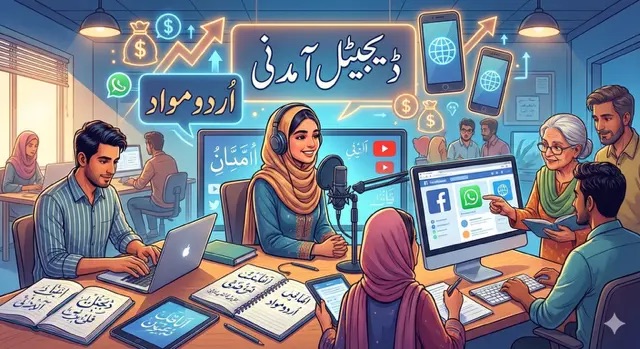
Urdu language skills are emerging as a viable source of digital income as regional-language content consumption continues to rise across online platforms. Media professionals and digital publishers note that demand for Urdu writers, translators, voice artists, and content editors has increased in recent years, driven by smartphone usage, social media expansion, and platform-based monetisation models.
With audiences spread across India, Pakistan, Gulf countries, and the wider diaspora, Urdu content is finding sustained viewership on websites, YouTube, Facebook, and messaging platforms. This growing demand has opened low-investment income opportunities for youth, freelancers, and media workers who possess strong language command, even without formal technical qualifications.
Skills in Demand
Urdu learning, spoken skills and other language services continue to offer steady income opportunities for Urdu speakers. Demand exists for Urdu teaching, writing and speaking, voice over urdu artists, translation of English news into Urdu, Telugu government notifications into Urdu, and Hindi scripts into Urdu or Roman Urdu. In addition to local news portals, NGOs, and minority institutions, such assignments are increasingly sourced through international freelancing platforms such as Upwork, Fiverr, Freelancer, PeoplePerHour, and Guru, as well as global language-service marketplaces including ProZ and TranslatorsCafe. Work also flows through freelance WhatsApp groups and direct client outreach on professional networks like Facebook and LinkedIn. Media professionals note that monthly earnings typically range between ₹15,000 and ₹60,000, depending on workload, turnaround time, and client base.
AI-assisted work has further expanded opportunities for Urdu speakers. Tasks such as AI voiceovers in Urdu, script rewriting, news summarisation, subtitle generation, and social media captioning rely more on language sense than formal degrees. Using AI chat tools, voice generators, video editors, and transcription tools, freelancers can earn between ₹25,000 and ₹50000 per month.
Hyderabad’s expanding digital media ecosystem has also created demand for Urdu-speaking professionals in news desk assistance, fact checking, script editing, field coordination, and social media management. These roles are available across digital news portals, YouTube channels, independent journalists, and community media startups.
Growing Trend of Online Classes
Additionally, online teaching has become a viable income stream. Spoken Urdu, Quran reading basics, Urdu writing, and Deccani Urdu conversation are taught through Zoom classes, WhatsApp groups, and social media promotion, generating monthly earnings of ₹10,000 to ₹30,000.
Editors and digital media professionals say Urdu has moved beyond being viewed as a cultural or academic skill and is increasingly being recognised as a functional economic resource in the digital space. As artificial intelligence tools reduce technical barriers and platforms continue to reward consistent content, language proficiency is becoming a key requirement across media and communication roles.
However, experts caution that income levels depend on factors such as quality, consistency, platform policies, and audience trust. While the opportunities are expanding, sustainable earnings require skill development, ethical content practices, and long-term engagement. For Urdu-speaking youth, especially in urban centres and smaller towns, the digital economy now presents a structured pathway where language skills align directly with employability and income generation.
In India, beyond Jammu and Kashmir, large Urdu-speaking and Urdu-understanding populations are found in states such as Uttar Pradesh, Bihar, Delhi Punjab, Telangana, Maharashtra, and parts of North Karnataka. On digital platforms, demand has shifted away from classical Urdu or formal Hindi toward everyday Hindustani, which reflects commonly spoken Urdu, said Dr. Subhani, a language expert from Karnataka.
More Tech News
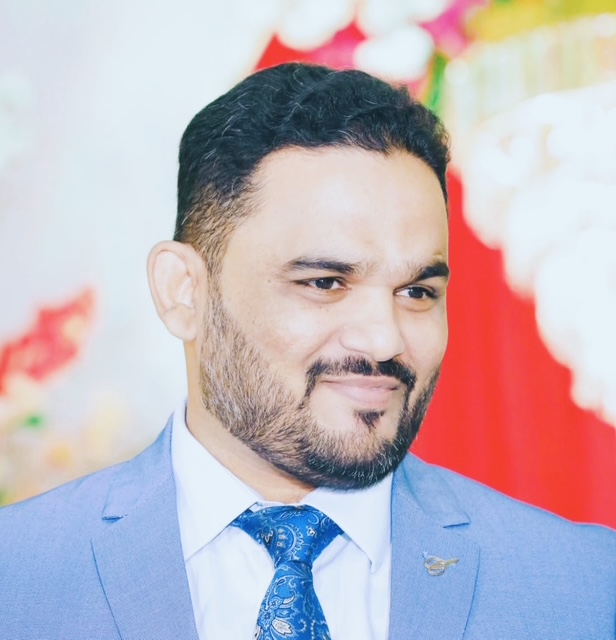
Mohammed Naseer Giyas is a multi-media and bilingual journalist with over 20 years of experience across print, digital, and television media. Founder of Raftaar-e-Deccan, he is an alumnus of IVLP, Thomson Reuters Foundation, and ICFJ, and has worked with leading English and Urdu news organisations.